|
Welcome
|
You have to register before you can post on our site.
|

|
|
(UEFI) Dell XPS 15z L511z modded BIOS - and HOWTO
|
Posts: 523
Threads: 0
Joined: Aug 2011
Reputation:
23
01-25-2015, 08:29 PM
(This post was last modified: 01-25-2015, 08:36 PM by kasar.)
I'm rendering some video projects now and it will take some hours.
however when it ends tomorrow, I can try flash it.
also if sucessfull I may ask to also mod the latest v7 beta I'm modding now since it have more recent changes than the v6 version.
or let me to know how to mod if by myself 
Posts: 81
Threads: 0
Joined: Jun 2012
Reputation:
11
01-26-2015, 05:24 AM
(This post was last modified: 01-26-2015, 05:42 AM by Brabbelbla.)
[CUT]
Posts: 88
Threads: 0
Joined: Feb 2013
Reputation:
6
(01-25-2015, 07:55 PM)Brabbelbla Wrote: @follow_me
You mentioned that replacing <some driver>, don't remember which one, with your Shell enabler would be best, because it gets loaded in recovery mode. Is that what the unknown sections in many drivers, visible with AndyTool are about?
@ Brabbelbla
Iit was floppy driver. With 'drivers' command you can get list of all loaded drivers, get one loaded but never used and replace it with driver you want. You should keep original deppendency section and GUID
I'm not sure that all flash drivers are loaded at boot time
Posts: 81
Threads: 0
Joined: Jun 2012
Reputation:
11
01-26-2015, 07:09 AM
(This post was last modified: 01-26-2015, 07:16 AM by Brabbelbla.)
I see. Actually none of the flash drivers are displayed by 'drivers'. Maybe some were at some stage? Doesn't the BIOS image get shadowed in memory? Maybe they were unloaded after that.
Anyway, I believe in Phoenix BIOSes normally RaidEfiRom/SataDriver gets called by PlatformPci(Dxe), there is a reference in it to (one of) the protocol(s) published by RaidEfiRom. In the AMI source code it is loaded from SBDxe, which I guess covers the same function as PlatformPciDxe. It is loaded really early, if I see it correctly only the RetrainLink 'procedure' precedes it.
So maybe the driver ran at the wrong stage when I plainly replaced SystemIsaFloppyDxe with it. If kasars test doesn't work, maybe the solution would be a custom UEFI driver replacing PlatformPci, that loads the RaidEfiRom and then PlatformPci (and maybe other drivers, replacing the VBIOS with GOP drivers could be nice) from some other location; a sacrificed (flash part?) module. Does that sound plausible?
In principle, RaidEfiRom/SataDriver is a generic driver, so the code should be OK, I guess.
Posts: 523
Threads: 0
Joined: Aug 2011
Reputation:
23
01-26-2015, 11:28 AM
(This post was last modified: 01-26-2015, 11:35 AM by kasar.)
ok, flashed and tested.
however, results not as expected...
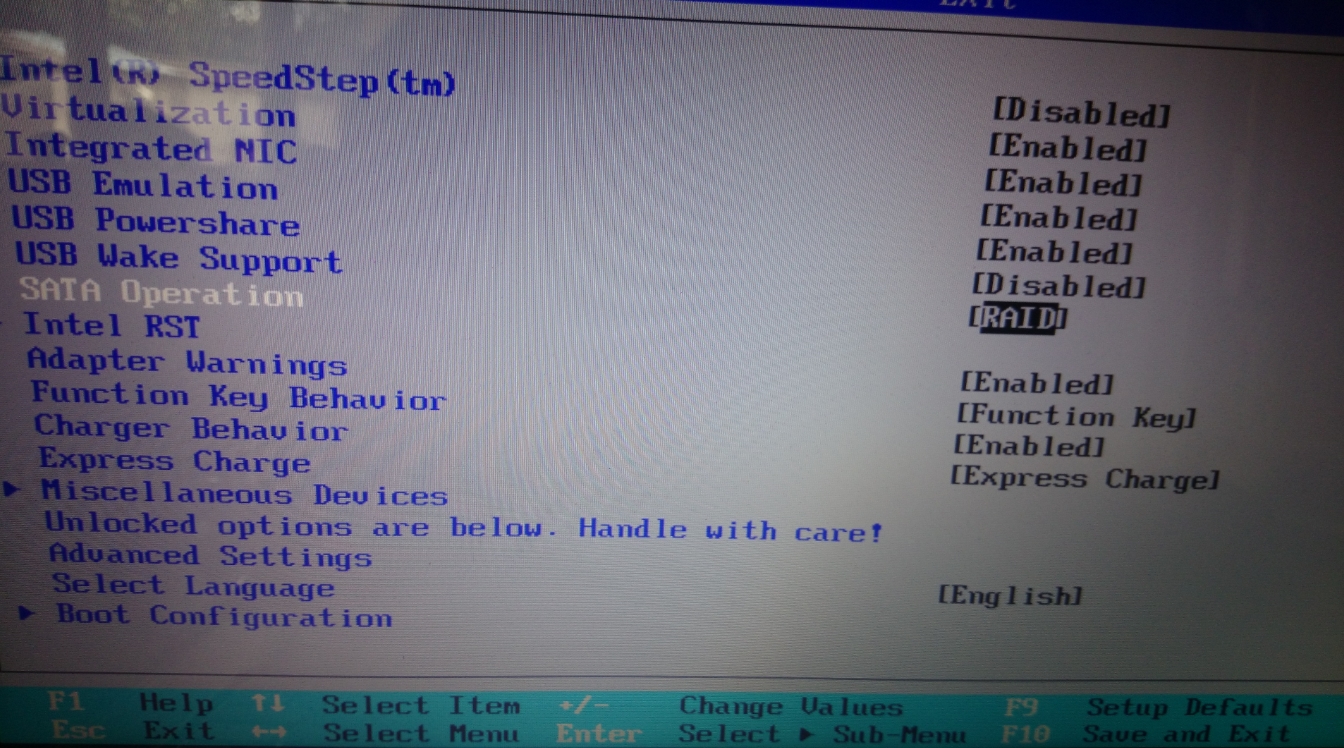
changed to RAID, restarted system
nothing detected
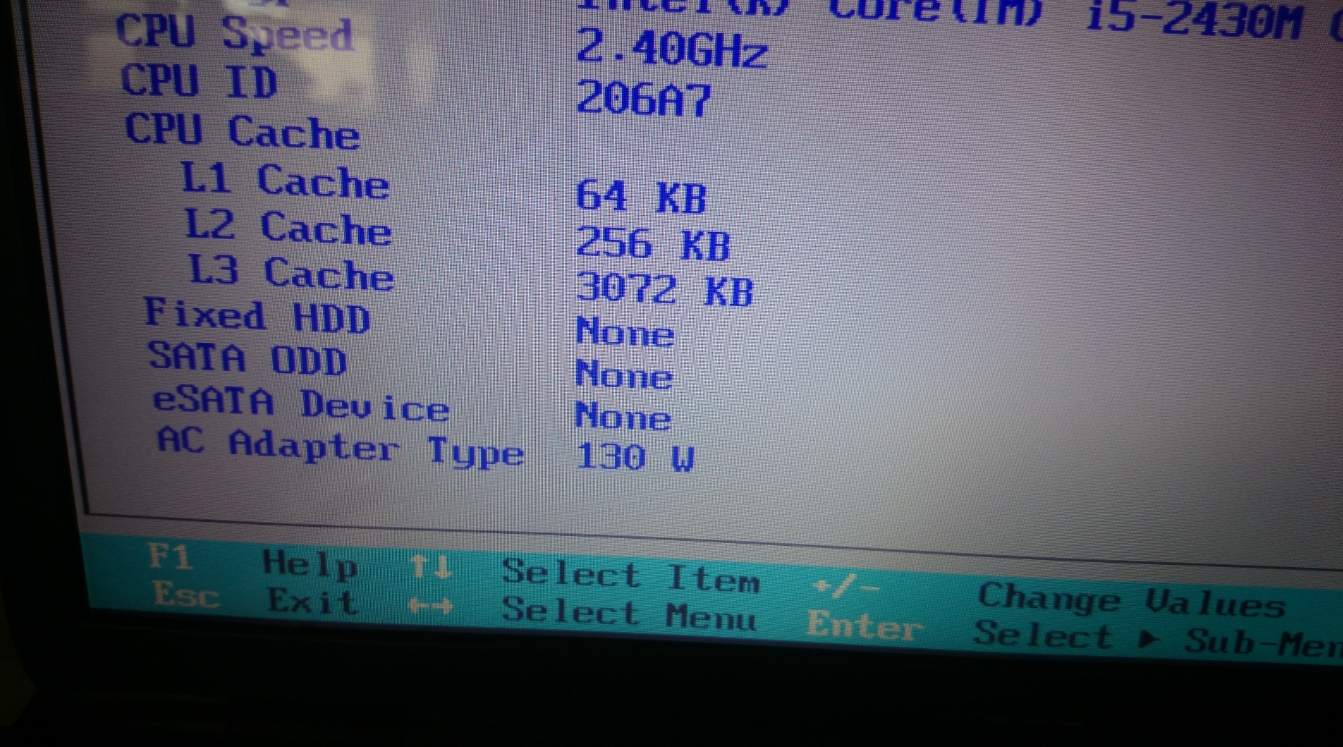
also when RAID option is selected, Intel RST menu appear, but while trying to enter, nothing happen except the cursor moves to the top position
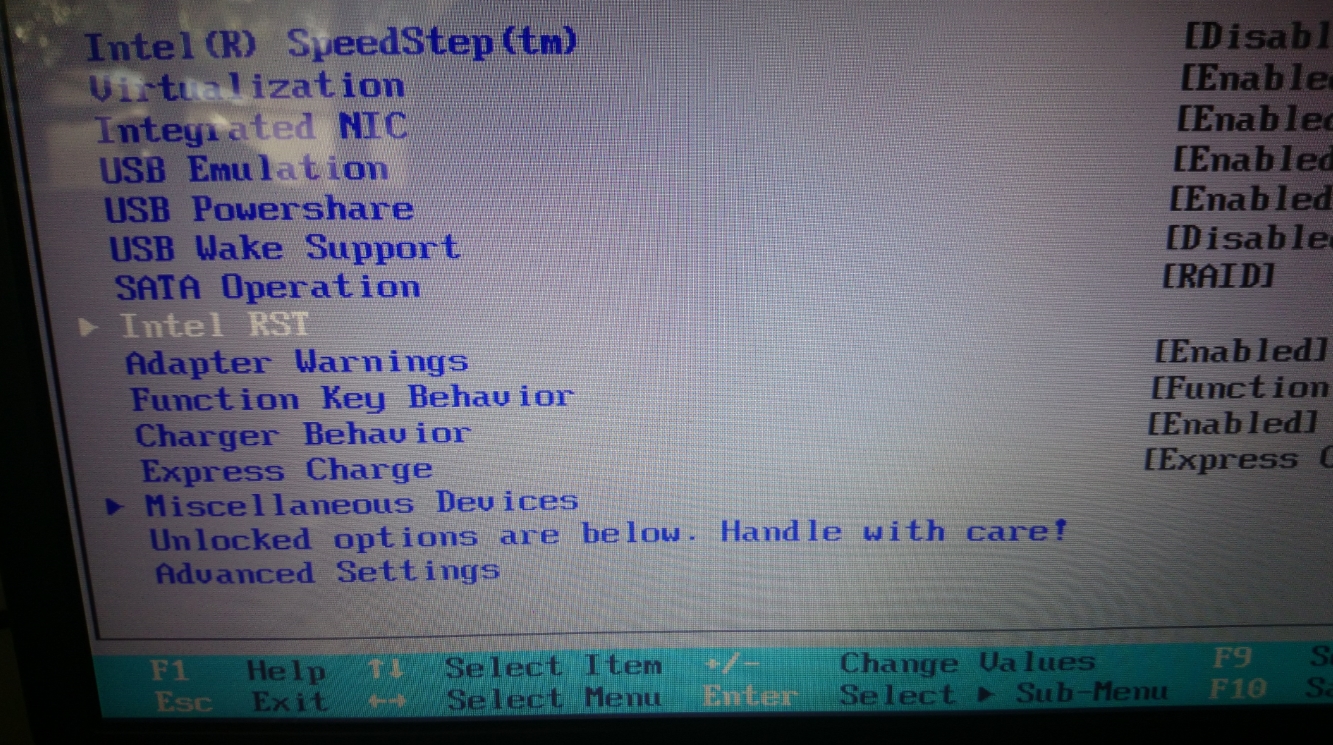
so well, I think we will need to test another method.
Posts: 81
Threads: 0
Joined: Jun 2012
Reputation:
11
01-26-2015, 11:49 AM
(This post was last modified: 01-26-2015, 11:50 AM by Brabbelbla.)
Could you, in RAID mode, boot the shell, and use the 'dh -b' command? In the list you get, there are entries for all valid images I believe, can you see RaidEfiRom.efi there? If it isn't, I made some mistake, if it is, the issue is deeper.
Posts: 523
Threads: 0
Joined: Aug 2011
Reputation:
23
Code: Handle dump
1: Image(DxeMain.efi)
2:
3: Decompress
4:
5:
6: DevPath (MemMap(11:FFF90000-FFFFFFFF))
7: DevPath (MemMap(11:FFF50000-FFF7FFFF))
8: DevPath (MemMap(11:B9F08010-BA68800F))
9:
A:
B: Image(SystemBootScriptSaveDxe.efi)
C:
D: Image(SystemRuntimeDxe.efi)
E:
F: Image(SystemSecurityStubDxe.efi)
10:
11: Image(SystemStatusCodeGenericRt.efi)
12:
13:
14: Image(SystemStatusCodePort80Rt.efi)
15: Image(SystemCmosDxe.efi)
16:
17: Image(SystemDevicePathDxe.efi)
18:
19: Image(SystemDataHubDxe.efi)
1A:
1B: Image(SystemNullMemoryTestDxe.efi)
1C:
1D: Image(SystemTableLoaderDxe.efi)
1E: Image(SystemAcpiSupportDxe.efi)
1F:
20:
21: Image(SystemHiiDatabaseDxe.efi)
22:
23: Image(SystemImageDecoderDxe.efi)
24: Image(PchIdeDeviceDetect.efi)
25: Image(ActiveBios.efi)
26:
27: Image(PchSpiRuntime.efi)
28:
29: Image(PchSerialGpio.efi)
2A:
2B: Image(PchReset.efi)
2C:
2D:
2E: Image(WdtDxe.efi)
2F: Image(PciHotPlug.efi)
30:
31: Image(CpuIo.efi)
32:
33: Image(BootCpuDxe.efi)
34: Image(PlatformDxe.efi)
35: Image(PlatformS3SaveDxe.efi)
36: Image(DellSmbios.efi)
37: Image(DellBeepCode.efi)
38: Image(SystemMetronomeDxe.efi)
39:
3A: Image(SystemErrorLogDxe.efi)
3B: DevPath (..000000000000000000000000000))
3C:
3D: Image(System8259InterruptControllerDxe.efi)
3E:
3F: Image(SystemSpeakerDxe.efi)
40:
41: Image(SystemCrc32SectionExtractDxe.efi)
42:
43: Image(SystemDataHubStdErrDxe.efi)
44: Image(SystemSmbiosDxe.efi)
45:
46: Image(SystemFormBrowser2Dxe.efi)
47: DevPath (..000000000000000000000000000))
48:
49: Image(SystemSlp2Dxe.efi)
4A: Image(SystemErrorMenuDxe.efi)
4B: DevPath (..42,B092BEBA0000000000000000))
4C:
4D: Image(SystemFrameworkHiiDatabaseDxe.efi)
4E:
4F:
50:
51:
52:
53:
54:
55: Image(PciHostBridge.efi)
56:
57: PciRootBridgeIo DevPath (Acpi(PNP0A03,0))
58: Image(SystemBootMenuDxe.efi)
59: Image(SmmAccess.efi)
5A:
5B: Image(IbexPeakGlobalSmiControl.efi)
5C:
5D: Image(HeciDrv.efi)
5E:
5F: Image(HuronRiverPlatformFlashDxe.efi)
60:
61:
62: Image(IbexPeakFlashControllerDxe.efi)
63: Image(8518eFlashControllerDxe.efi)
64:
65: Image(MX25L3205DFlashPartDxe.efi)
66:
67: Image(EN25F32FlashPartDxe.efi)
68:
69: Image(EN25F40FlashPartDxe.efi)
6A:
6B: Image(W25Q32FlashPartDxe.efi)
6C:
6D: Image(W25X40FlashPartDxe.efi)
6E:
6F: Image(W25Q80FlashPartDxe.efi)
70:
71: Image(SystemFirmwareDeviceDxe.efi)
72: Image(SystemVariableDxe.efi)
73:
74:
75: Image(SystemCapsuleRt.efi)
76:
77: Image(SystemMonotonicCounterRt.efi)
78:
79: Image(SystemDiagnosticSplashScreenDxe.efi)
7A:
7B: DevPath (..000000000000000000000000000))
7C: Image(SystemDiagnosticSummaryScreenDxe.efi)
7D:
7E: DevPath (..000000000000000000000000000))
7F: Image(SystemKeyDescDxe.efi)
80: DevPath (..000000000000000000000000000))
81: Image(PchS3Support.efi)
82: Image()
83: Image(PlatformSetup.efi)
84:
85:
86: Image(CpuInitPhnxDxe.efi)
87: Image(DellVariableInitDxe.efi)
88:
89: Image(SystemBootManagerDxe.efi)
8A: Image(PciExpress.efi)
8B: Image(PchSmbusDxe.efi)
8C:
8D: Image(MpCpu.efi)
8E:
8F:
90:
91:
92: Image(InitVproPolicy.efi)
93:
94: Image(PchInitDxe.efi)
95: Image(DellMfgBoardDxe.efi)
96: Image(SystemAcpiS3SaveDxe.efi)
97:
98: Image(SystemUserManagerDxe.efi)
99: Image(SmbiosMemory.efi)
9A: Image(SmartTimer.efi)
9B:
9C: Image(SmbiosVpro.efi)
9D: Image(OptimusDxe.efi)
9E: Image(MAILBOX.efi)
9F: Image(SystemRtcRt.efi)
A0:
A1: Image(DellMfgDxe.efi)
A2: Image(SystemWatchdogTimerDxe.efi)
A3:
A4: Image(SystemSmbiosEventLogDxe.efi)
A5:
A6: Image(SystemPasswordCredentialDxe.efi)
A7:
A8: DevPath (..000000000000000000000000000))
A9: Image(SystemVgaDxe.efi) DriverBinding
AA: Image(SystemPciIsaBusDxe.efi) DriverBinding
AB: Image(SystemIsaKbcDxe.efi) DriverBinding
AC: Image(SystemIsaFloppyDxe.efi) DriverBinding
AD: Image(SystemIsaSerialDxe.efi) DriverBinding
AE: Image(SystemPs2KeyboardDxe.efi) DriverBinding
AF: Image(SystemIdeAtaPassThruDxe.efi) DriverBinding
B0: Image(SystemAhciAtaAtapiPassThruDxe.efi) DriverBinding
B1: Image(SystemXhciDxe.efi) DriverBinding
B2: Image(SystemXhciResetSystem.efi)
B3: Image(SystemEhciDxe.efi) DriverBinding
B4: Image(SystemUhciDxe.efi) DriverBinding
B5: Image(SystemUsbMassStorageDxe.efi) DriverBinding
B6: Image(SystemUsbKbDxe.efi) DriverBinding
B7: Image(SystemUsbMouseDxe.efi) DriverBinding
B8: Image(SystemConPlatformDxe.efi) DriverBinding
B9: DriverBinding
BA: Image(SystemConSplitterDxe.efi) DriverBinding
BB: DriverBinding
BC: DriverBinding
BD: DriverBinding
BE: DriverBinding
BF: Txtout
C0: Txtin SimplePointer
C1: Txtout GraphicsOutput
C2: Image(SystemGraphicsConsoleDxe.efi) DriverBinding
C3:
C4: Image(SystemTerminalDxe.efi) DriverBinding
C5: Image(SystemTextConsoleVgaDxe.efi) DriverBinding
C6: Image(SystemDiskIoDxe.efi) DriverBinding
C7: Image(SystemPartitionDxe.efi) DriverBinding
C8: Image(SystemEnhancedFatDxe.efi) DriverBinding
C9: Image(SystemEnglishDxe.efi)
CA: UnicodeCollation
CB: Image(SmmControl.efi)
CC: Image(IntelPchLegacyInterrupt.efi)
CD:
CE: Image(SataController.efi) DriverBinding ComponentName
CF: Image(IncompatiblePciDevice.efi)
D0:
D1: Image(IdeRController.efi) DriverBinding ComponentName
D2: Image(PciSerial.efi) DriverBinding ComponentName
D3: Image(IT8518ESioDxe.efi) DriverBinding
D4: Image(Jmb38xInitDxe.efi) DriverBinding
D5: Image(OemReadyToBootFn.efi)
D6: Image(SystemPciBusDxe.efi) DriverBinding
D7:
D8: Image(SystemUsbBusDxe.efi) DriverBinding
D9: Image(DellReadyToBoot.efi)
DA:
DB: Image(SystemFormBrowserLayoutDxe.efi)
DC:
DD: Image(DellIdReadyToBoot.efi)
DE: Image(PlatformSetupAdvancedDxe.efi)
DF: DevPath (..42,040000003E01000000000000))
E0: Image(SystemSetupMainDxe.efi)
E1: DevPath (..42,050000003E01000000000000))
E2: Image(SystemSetupExitDxe.efi)
E3: DevPath (..42,060000003E01000000000000))
E4: Image(DellPsa.efi)
E5: Image(SystemAhciBusDxe.efi) DriverBinding
E6: Image(SystemIdeBusDxe.efi) DriverBinding
E7: Image(PlatformPci.efi)
E8:
E9: Image(SystemHddPwdOem.efi)
EA: Image(SystemImageDisplayDxe.efi)
EB: Image(SystemHiiImageDisplayDxe.efi)
EC: Image(SmmBase.efi)
ED: Image()
EE: Image()
EF: Image()
F0: Image(DellFfs.efi)
F1: Image(SystemHddPwdDxe.efi)
F2: DevPath (..000000000000000000000000000))
F3: Image(SystemStatusCodeGenericSmm.efi)
F4: Image(SystemStatusCodeGenericSmm.efi)
F5:
F6: Image(SystemStatusCodePort80Smm.efi)
F7: Image(SystemStatusCodePort80Smm.efi)
F8: Image(SystemCmosSmm.efi)
F9: Image(SystemCmosSmm.efi)
FA:
FB: Image(SystemSmmRuntimeRt.efi)
FC: Image(SystemSmmRuntimeRt.efi)
FD:
FE: Image(SystemOsb.efi)
FF: Image(PchSpiSmm.efi)
100: Image(PchSpiSmm.efi)
101:
102: Image(PchSmbusSmm.efi)
103: Image(PchSmbusSmm.efi)
104:
105: Image(HeciSmm.efi)
106: Image(HeciSmm.efi)
107: Image(ModulesSmmThunkSmm.efi)
108: Image(ModulesSmmThunkSmm.efi)
109: Image(HuronRiverPlatformFlashSmm.efi)
10A: Image(HuronRiverPlatformFlashSmm.efi)
10B:
10C:
10D: Image(PchSmiDispatcher.efi)
10E: Image(PchSmiDispatcher.efi)
10F:
110: Image(SystemSecureFlashSleepTrapSmm.efi)
111: Image(SystemSecureFlashSleepTrapSmm.efi)
112: Image(SystemSetupSecurityDxe.efi)
113: DevPath (..42,080000003E01000000000000))
114: Image(DellSplashLogoDxe.efi)
115: Image(DellHddPwdVariableInitDxe.efi)
116: Image(DellWarningDxe.efi)
117: Image(SystemIdeAtaPassThruSmm.efi)
118: Image(SystemIdeAtaPassThruSmm.efi)
119: Image(PchEmulateKbc.efi)
11A: Image(PchEmulateKbc.efi)
11B:
11C: Image(IbexPeakFlashControllerSmm.efi)
11D: Image(IbexPeakFlashControllerSmm.efi)
11E: Image(IoTrap.efi)
11F: Image(IoTrap.efi)
120:
121: Image(PchPcieSmm.efi)
122: Image(PchPcieSmm.efi)
123: Image(8518eFlashControllerSmm.efi)
124: Image(8518eFlashControllerSmm.efi)
125:
126: Image(PlatformS3Save.efi)
127: Image(PlatformS3Save.efi)
128: Image(PlatformSmm.efi)
129: Image(PlatformSmm.efi)
12A: Image(SystemAhciAtaAtapiPassThruSmm.efi)
12B: Image(SystemAhciAtaAtapiPassThruSmm.efi)
12C: Image(SystemSwSmiAllocatorRt.efi)
12D: Image(SystemSwSmiAllocatorRt.efi)
12E:
12F:
130: Image(DigitalThermalSensorSmm.efi)
131: Image(DigitalThermalSensorSmm.efi)
132:
133: Image(PowerManagement2.efi)
134: Image(PowerManagement2.efi)
135:
136: Image(MX25L3205DFlashPartSmm.efi)
137: Image(MX25L3205DFlashPartSmm.efi)
138:
139: Image(EN25F32FlashPartSmm.efi)
13A: Image(EN25F32FlashPartSmm.efi)
13B:
13C: Image(EN25F40FlashPartSmm.efi)
13D: Image(EN25F40FlashPartSmm.efi)
13E:
13F: Image(W25Q32FlashPartSmm.efi)
140: Image(W25Q32FlashPartSmm.efi)
141:
142: Image(W25X40FlashPartSmm.efi)
143: Image(W25X40FlashPartSmm.efi)
144:
145: Image(W25Q80FlashPartSmm.efi)
146: Image(W25Q80FlashPartSmm.efi)
147:
148: Image(SystemFlashCommunicationDxe.efi)
149:
14A: Image(SystemSmmCommunicationSmm.efi)
14B: Image(SystemFirmwareDeviceSmm.efi)
14C: Image(SystemFirmwareDeviceSmm.efi)
14D: Image(PiSaveStateAccess.efi)
14E: Image(PiSaveStateAccess.efi)
14F: Image(SaInitDxe.efi)
150:
151:
152: Image(SystemSmmOEMInt15Smm.efi)
153: Image(SystemSmmOEMInt15Smm.efi)
154: Image(ShadowMemoryGateSmm.efi)
155: Image(ShadowMemoryGateSmm.efi)
156: Image(PlatformCsm.efi)
157:
158: Image(SystemSmmServicesSmm.efi)
159: Image(SystemSmmServicesSmm.efi)
15A: Image(PowerManagementDxe.efi)
15B: Image(OemInt15SmmHandler.efi)
15C: Image(OemInt15SmmHandler.efi)
15D: Image(SystemLegacyBiosDxe.efi)
15E:
15F: Image(WinFlash.efi)
160: Image(WinFlash.efi)
161: Image(SystemVariableSmm.efi)
162: Image(SystemVariableSmm.efi)
163:
164: Image(SystemCryptSvcRt.efi)
165: Image(SystemCryptSvcRt.efi)
166: Image(JmbD3eSmm.efi)
167: Image(SystemSmBiosSmm.efi)
168: Image(SystemSmBiosSmm.efi)
169: Image(DellLoadDef.efi)
16A: Image(DellLoadDef.efi)
16B: Image(DellMfgSmm.efi)
16C: Image(DellMfgSmm.efi)
16D: Image(DellDa.efi)
16E: Image(DellDa.efi)
16F:
170: Image(DellDiag.efi)
171: Image(DellDiag.efi)
172: Image(SystemHddPwdSmm.efi)
173:
174: PciIo DevPath (Acpi(PNP0A03,0)/Pci(1C|3))
175: PciIo UsbHc2 DevPath (..NP0A03,0)/Pci(1C|3)/Pci(0|0))
176: Txtin UsbIo ConIn DevPath (../Pci(1C|3)/Pci(0|0)/Usb(2,0))
177: UsbIo SimplePointer DevPath (../Pci(1C|3)/Pci(0|0)/Usb(3,0))
178:
179: PciIo DevPath (Acpi(PNP0A03,0)/Pci(1C|4))
17A: PciIo DevPath (..NP0A03,0)/Pci(1C|4)/Pci(0|0))
17B: PciIo DevPath (..NP0A03,0)/Pci(1C|4)/Pci(0|2))
17C: PciIo DevPath (..NP0A03,0)/Pci(1C|4)/Pci(0|3))
17D: PciIo DevPath (..NP0A03,0)/Pci(1C|4)/Pci(0|4))
17E: DevPath (..000000000000000000000000000))
17F: PciIo DevPath (Acpi(PNP0A03,0)/Pci(2|0))
180:
181: Txtout GraphicsOutput EdidDiscovered EdidActive ConOut StdErr DevPath (..0)/Pci(2|0)/AcpiAdr(4C4DB74))
182: PciIo DevPath (Acpi(PNP0A03,0)/Pci(1|0))
183: PciIo DevPath (..PNP0A03,0)/Pci(1|0)/Pci(0|0))
184: Image(MePciUpdate.efi)
185: Image(ExternalSmi.efi)
186: Image(MACIDInit.efi)
187: Image(SystemSmmUsbLegacySmm.efi)
188:
189: Image(SystemSmmUsbLegacySmm.efi)
18A: PciIo DevPath (Acpi(PNP0A03,0)/Pci(1F|0))
18B: DevPath (..0)/Pci(1F|0)/Acpi(PNP0A05,0))
18C: DevPath (..0)/Pci(1F|0)/Acpi(PNP0A05,1))
18D: Txtin IsaIo ConIn DevPath (..i(PNP0A05,0)/Acpi(PNP0303,0))
18E: IsaIo DevPath (..i(PNP0A05,0)/Acpi(PNP0F03,0))
18F: IsaIo DevPath (..i(PNP0A05,0)/Acpi(PNP0C09,0))
190:
191: PciIo ExtScsiPassThru DevPath (Acpi(PNP0A03,0)/Pci(1F|2))
192: Image(SystemAhciBusSmm.efi)
193: Image(SystemAhciBusSmm.efi)
194:
195: Image(SystemSmmAhciAspiLegacyRt.efi)
196: Image(SystemSmmAhciAspiLegacyRt.efi)
197: Image(SystemFlashCommunicationSmm.efi)
198: Image(SystemFlashCommunicationSmm.efi)
199: Image(InitialProgramLoadDxe.efi)
19A: Image(SystemMultiBootIiiDxe.efi)
19B: PciIo DevPath (Acpi(PNP0A03,0)/Pci(1C|0))
19C: PciIo DevPath (Acpi(PNP0A03,0)/Pci(1C|1))
19D: PciIo UsbHc2 DevPath (Acpi(PNP0A03,0)/Pci(1A|0))
19E: UsbIo DevPath (..NP0A03,0)/Pci(1A|0)/Usb(0,0))
19F: PciIo UsbHc2 DevPath (Acpi(PNP0A03,0)/Pci(1D|0))
1A0: UsbIo DevPath (..NP0A03,0)/Pci(1D|0)/Usb(0,0))
1A1: PciIo DevPath (Acpi(PNP0A03,0)/Pci(0|0))
1A2: PciIo DevPath (..PNP0A03,0)/Pci(1|0)/Pci(0|1))
1A3: PciIo DevPath (Acpi(PNP0A03,0)/Pci(16|0))
1A4: PciIo DevPath (Acpi(PNP0A03,0)/Pci(16|1))
1A5: PciIo DevPath (Acpi(PNP0A03,0)/Pci(1B|0))
1A6: PciIo DevPath (..NP0A03,0)/Pci(1C|1)/Pci(0|0))
1A7: PciIo DevPath (Acpi(PNP0A03,0)/Pci(1C|5))
1A8: PciIo DevPath (..NP0A03,0)/Pci(1C|5)/Pci(0|0))
1A9: PciIo DevPath (Acpi(PNP0A03,0)/Pci(1F|3))
1AA: PciIo DevPath (Acpi(PNP0A03,0)/Pci(1F|6))
1AB: DiskIo BlkIo UsbIo DevPath (../Pci(1D|0)/Usb(0,0)/Usb(1,0))
1AC: Image(Shell.efi) ShellInt
1AD: Fs DiskIo BlkIo DevPath (..b(1,0)/HD(Part1,Sig0088A98A))
1AE: Txtout DevPath (..,Sig0088A98A)/\raid_info.txt)
the last line seems related with my usb stick and following command wich I entered
Code: dh -b > fs0:\raid_info.txt
Posts: 81
Threads: 0
Joined: Jun 2012
Reputation:
11
01-26-2015, 01:01 PM
(This post was last modified: 01-26-2015, 01:01 PM by Brabbelbla.)
Maybe I should have been clearer, just had an exam, pretty spent now. -b is for 'break', allowing you to read everything in the list. If you export it, don't use it.
Posts: 523
Threads: 0
Joined: Aug 2011
Reputation:
23
01-26-2015, 01:06 PM
(This post was last modified: 01-27-2015, 10:00 AM by kasar.)
oh,didn't knew the parameter meaning, next time I'll use just dh without parameters, but well, I noticed it didnt got cut on the output.
anyway, relating what you said, I cant see your raid driver.
Posts: 88
Threads: 0
Joined: Feb 2013
Reputation:
6
01-27-2015, 06:05 AM
(This post was last modified: 01-27-2015, 06:06 AM by follow_me.)
(01-26-2015, 07:09 AM)Brabbelbla Wrote: I see. Actually none of the flash drivers are displayed by 'drivers'. Maybe some were at some stage? Doesn't the BIOS image get shadowed in memory? Maybe they were unloaded after that.
Anyway, I believe in Phoenix BIOSes normally RaidEfiRom/SataDriver gets called by PlatformPci(Dxe), there is a reference in it to (one of) the protocol(s) published by RaidEfiRom. In the AMI source code it is loaded from SBDxe, which I guess covers the same function as PlatformPciDxe. It is loaded really early, if I see it correctly only the RetrainLink 'procedure' precedes it.
So maybe the driver ran at the wrong stage when I plainly replaced SystemIsaFloppyDxe with it. If kasars test doesn't work, maybe the solution would be a custom UEFI driver replacing PlatformPci, that loads the RaidEfiRom and then PlatformPci (and maybe other drivers, replacing the VBIOS with GOP drivers could be nice) from some other location; a sacrificed (flash part?) module. Does that sound plausible?
In principle, RaidEfiRom/SataDriver is a generic driver, so the code should be OK, I guess. @Brabbelbla
Idea is nice - but Raid driver is deppends on PlatformPci and should be loaded after, and you are right - SystemIsaFloppyDxe is not the place it should be. I see some problems here - first of all there is a system loader , which know nothing about new RAID driver, and will load existing driver/OROM according to the setup preferences - which can make a conflict between system and RAID drivers (for example - owerwritten protocol pointers ). Second one - we should insert it just in right position - after all required drivers are loaded and just before system enumerated boot block devices , or you will get situationlike with boot flash drive when it is inserted in wrong time - you see it, from shell , but it is not available from boot menu
I think it will be nice if we could insert original PlatformPci as separate module with new image guid (not replace existing one), then replace original PlatformPci image with custom loader , which will load then image with the new PlatformPci guid , and then Unload existing drivers if needed and load additionl ones
Can you try to insert a new module ?
Btw - we can upgrade our system up to 2.4 spec by loading modules with missing protocols if all this will work
|
Users browsing this thread: 14 Guest(s)
|